It’s easy to feel stuck when your technology is outdated or difficult to maintain. Systems slow down, small issues take longer to fix, and your team spends more time troubleshooting than focusing on the work that really matters.
Modernization can change that, which is likely why 99% of IT decision-makers said they planned to adopt emerging technologies and strategies in a 2024 survey.1 However, the process needs structure, or it can quickly become overwhelming.
TMC helps bring order to modernization efforts so the outcome supports your daily operations and long-term goals. Read on to learn why IT modernization is important and how to develop a strategy that sets the stage for real progress.
Why Is IT Modernization Important?
IT modernization is the process of updating legacy systems, infrastructure, and processes to support modern digital operations. This typically includes upgrading or enhancing:
- Core infrastructure and data centers that power critical systems
- Infrastructure that connects users, platforms, and apps
- Voice and communications platforms to support collaboration
- Cloud environments to deliver better scalability and agility
- Security and governance frameworks that protect data and operations
When modernization efforts happen in silos, it can create risk and inefficiencies across your organization. Our role at TMC is to unify these efforts into a coordinated roadmap, so each initiative supports your broader modernization strategy.
Top 6 Benefits of IT Modernization
The benefits of IT modernization extend beyond upgraded hardware or faster applications. When done strategically, modernization delivers:
1. Improved Resilience
Redundant and fault-tolerant infrastructure can help your business withstand outages, hardware failures, and sudden changes in workload demand. Updated designs also make it easier to recover from disruptions without prolonged downtime. As a result, teams gain a more stable foundation to support ongoing operations.
2. Stronger Security
Modern platforms provide built-in security features that offer more visibility into potential threats, so your teams can detect issues earlier and respond faster. Plus, adopting newer tools reduces the risk associated with legacy systems that no longer receive security patches or vendor support.
3. Seamless Scalability
A modernized environment that leverages cloud connectivity can be expanded on demand, so it grows with your organization instead of holding it back. With this flexibility, you can add new services, increase data usage, and embrace AI-driven initiatives without a rigid infrastructure holding you back.
4. Lower Costs
Over time, modernization becomes a cost-saving investment rather than an added expense. Modern environments use energy and resources more efficiently, which lowers operational expenses. Plus, many organizations save money through better licensing management, reduced technical debt, and smarter allocation of IT staff.
5. Compliance Alignment
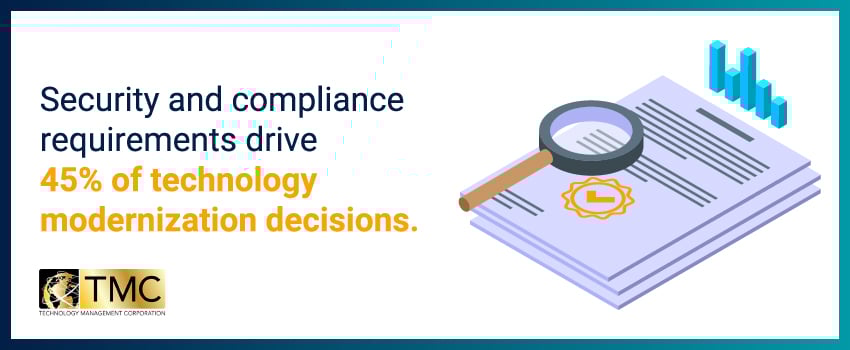
Aligning security and compliance requirements drives 45% of technology modernization decisions across organizations.1 Integrated governance, risk, and privacy controls can help your teams comply with frameworks like NIST, ISO, HIPAA, or CMMC, reducing compliance risks and supporting audit readiness.
6. Better Experiences
Modern collaboration and communications platforms help your teams work more efficiently from any location. Updated systems also reduce delays and outages that affect customer satisfaction. When the underlying infrastructure works better, the entire user experience becomes smoother.
What Modernization Challenges Do Organizations Face?
Despite its benefits, modernization is rarely a simple process. We routinely see organizations face challenges like:
- Legacy system dependencies that make migrations difficult
- Limited budgets in both the public and private sectors
- Security and compliance risks during transition periods
- Fragmented ownership between IT, security, operations, and leadership teams
- Vendors recommending solutions that don’t align with long-term strategy
At TMC, we help bridge these gaps through structure, independence, and accountability, so that technology decisions support your mission rather than steer it.
IT Modernization Strategy: A Governance-First Approach
A successful IT modernization strategy begins with structure and governance before you choose any new platforms. Here are some steps you can take to align your technology modernization efforts with your goals:
Conduct a CSA
A current state assessment (CSA) provides a full picture of your infrastructure, apps, and security posture. It highlights the strengths and risks you’ll have to address before modernization begins, and helps you understand which systems to prioritize during the project.
Design Future State Architecture
A future state architecture outlines how your IT environment should operate once modernization is complete. This design helps your teams understand what capabilities will be needed in the future, so your modernization efforts don’t create short-term fixes with limited value.
Outline Governance Frameworks
Governance frameworks define ownership, decision-making structures, and accountability for your technology modernization initiatives. They help leaders understand how changes will be managed and measured across departments.
Prioritize Security & Compliance
Cybersecurity and compliance should guide your modernization efforts, not follow them. Aligning with frameworks such as NIST, ISO, CJIS, HIPAA, or CMMC ensures that your new systems are secure and compliant, so you can reduce risk during transition.
Follow a Phased Roadmap
A phased roadmap breaks modernization into manageable stages, reducing disruption for users and providing clear milestones that leadership can track. It also allows teams to validate improvements at each step, which ensures that progress delivers measurable value.
What Does IT Infrastructure Modernization Involve?
IT infrastructure modernization focuses specifically on upgrading the physical and virtual systems that support your daily operations. This work can include network redesign, data center modernization, virtualization efforts, disaster recovery planning, and hybrid cloud readiness.
Many of the environments we support, including airports, government agencies, healthcare systems, and education campuses, require modernization that balances regulatory requirements and public safety. The goal is to improve resilience without creating unnecessary disruption.

TMC: Your IT and Technology Modernization Expert
When you have the right strategy behind your IT modernization efforts, the process becomes less about replacing old tech and more about unlocking new possibilities. At TMC, we guide organizations through each stage with practical expertise and hands-on support, so every improvement delivers long-term value.
As an independent consulting firm, we don’t sell platforms or manage day-to-day operations – instead, we’ll help you:
- Define your modernization strategy and phased roadmaps
- Oversee vendor selection and implementation accountability
- Align your infrastructure, security, and AI initiatives under a unified governance strategy
- Ensure your modernization investments deliver value you can measure
If you’re ready for a clear path through digital transformation, we’re here to help you design a modernization strategy that delivers lasting results. Contact TMC today to get started.
Sources: