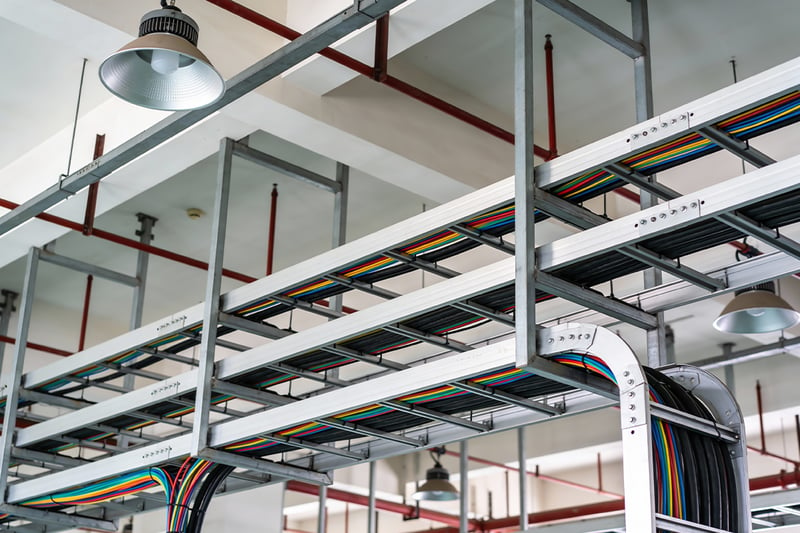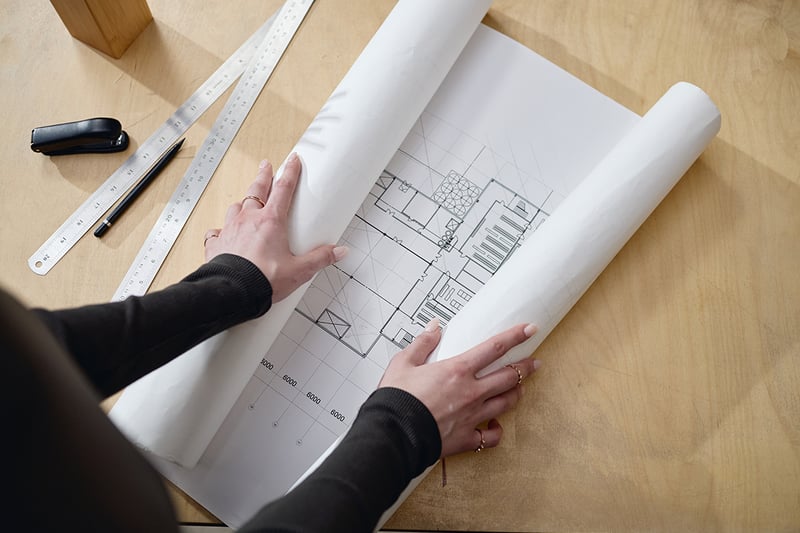

Organizations don’t just build infrastructure for today – they build it for the years and decades ahead. In environments where technology constantly changes, and systems often remain in place long after deployment, thoughtful technology design is essential.
Whether you’re building a new campus, courthouse, hospital, or enterprise headquarters, the technology foundation must be able to adapt from the start. At TMC, technology design isn’t an afterthought; it’s a core part of how we help clients realize resilient, scalable, and future-ready environments. Read on to see why strategic IT design matters.
Why Does Strategic Technology Design Matter?
In many capital projects, technology infrastructure can be overlooked until late in the planning process. But when decisions about networks, AV systems, security, and digital operations are deferred, organizations risk:
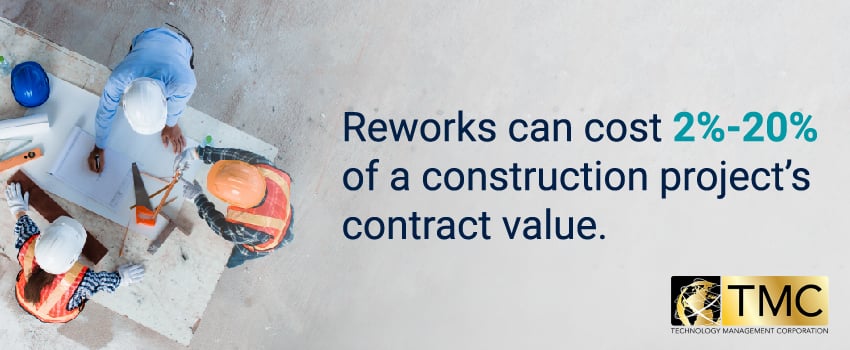
- Rework and redesigns during or after construction, which can cost anywhere from 2% and 20% of a project’s contract value.1
- Operational headaches due to fragmented systems that don’t talk to one another.
- Security, compliance, and governance gaps that slow productivity and create liability.
- Higher total cost of ownership resulting from reactive planning rather than strategic foresight.
A thoughtful technology design process addresses these issues head-on by accounting for future needs, technology trends, and organizational priorities – well before ground is broken.
How We Approach Technology Design at TMC
Effective technology design is both art and science. It begins with understanding how a facility or enterprise operates today – and where it’s headed tomorrow. While our services don’t replace architectural or engineering roles, they bring essential clarity and foresight to the technology dimension of complex projects.
1. Engage Early With Stakeholders
We start with meaningful conversations across your IT, facilities, operations, executive leadership, and end users. This helps us uncover your essential systems, anticipated trends or growth areas, and any constraints (budget, regulatory, physical) that may influence the design.
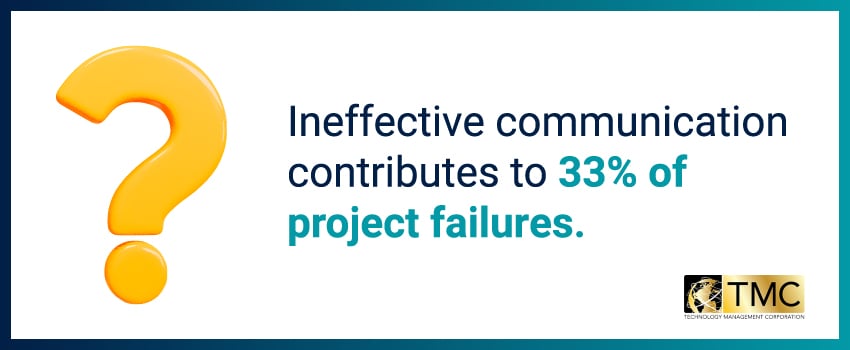
Ineffective communication is the primary contributor to 33% of project failures.1 Involving stakeholders early builds alignment and shared ownership, a critical foundation for successful project outcomes.
2. Balance Performance With Practicality
Every client has unique needs and constraints. Through structured discovery and prioritization, we help organizations make informed decisions, not just technical choices. This typically involves:
- Good-Better-Best matrices to show where investments will have the greatest impact.
- Scenario planning that tests design performance under potential use cases.
- Risk-adjusted planning that aligns your technology goals with budget realities.
These methods make it easier for leaders to see how design decisions will affect long-term operations and costs – empowering smarter, more defensible decisions.
3. Document and Coordinate for Clarity
Design documentation serves as the contract between strategy and execution. TMC's designs specify clear responsibilities and ownership for each technology domain, along with detailed network, security, voice, and AV frameworks that establish standards and principles for implementation and future updates.
Documentation ultimately becomes a tool for procurement, vendor coordination, and construction oversight, reducing ambiguity and risk throughout the project lifecycle.
What Does Future-Ready Technology Design Look Like?
Technology evolves quickly. A facility designed today should support innovations five, ten, or even twenty years into the future. That’s why future-ready design is not about guessing what will be tomorrow’s “next big thing,” but about building flexibility into every layer of infrastructure with:
- Modular and scalable networks that can accommodate higher speeds or additional devices without forklift upgrades.
- Standards for interoperability so AV, IT, and security systems integrate seamlessly.
- Documentation and governance frameworks that let organizations assess new technologies against a consistent baseline.
- Planning for moves, adds, and changes without major redesigns.
In practice, this might mean designing spaces so that power and data access are available even where they’re not immediately needed. The goal here is to help the infrastructure enable progress rather than constrain it.
Real-World Benefits of Thoughtful Technology Design
Organizations that invest in structured technology design typically enjoy benefits like:
Reduced Rework
Change orders and rework represent significant project costs. When technology decisions are made early in the capital planning process with input from all stakeholders, the likelihood of costly mid-project changes decreases dramatically.
A well-documented design prevents the scenario where construction crews discover network pathways conflicting with structural elements or security systems that can’t integrate as envisioned.
Fewer Integration Issues
Fragmented systems that don’t communicate with one another create operational headaches long after a facility opens. Strategic design establishes interoperability standards upfront, ensuring that network infrastructure, security systems, AV systems, and facility management tools work together seamlessly.
Stronger Security
Organizations that embed security into design avoid the costly task of retrofitting security measures into systems that weren’t built with security in mind.
A strategic technology design helps identify potential security risks early and addresses them by designing segmented networks, planning for proper data isolation, or establishing physical security controls that align with digital security requirements.
Lower Costs
Flexibility built into the initial design means that as new technology emerges, your organization can adopt innovations without replacing foundational infrastructure, protecting capital investments over decades.
Increased Confidence
Stakeholder confidence increases when expectations are documented and communicated clearly from the start. Project sponsors understand what the design will deliver, what it will cost, and when systems will be operational. Leadership teams can make informed decisions about technology investments because they understand the rationale behind design choices.
Future-Proof Your IT Design With TMC
Technology design is foundational, but it’s most effective when integrated with broader modernization and governance strategies. At TMC, we connect technology design with:
- WAN, core, and cloud infrastructure modernization to support distributed work and services.
- Cybersecurity and GRC planning to embed risk management from the start.
- AI governance and transformation to ensure data and analytics platforms are secure, ethical, and actionable.
If your organization is embarking on a new capital project, modernization initiative, or technology transformation effort, thoughtful technology design can make all the difference.
Contact TMC to explore how our technology consulting services can help you achieve secure, scalable, and future-ready outcomes.
Sources: