TL;DR
-
IT manages data, applications, and business systems, while OT monitors and controls physical equipment, industrial processes, and operational environments.
-
The biggest differences between IT and OT lie in their priorities, assets, environments, lifecycles, communication protocols, and tolerance for delays or failure.
-
AI strengthens both domains by improving analytics, cybersecurity, predictive maintenance, process efficiency, and real-time decision-making across connected systems.
-
A strong IT/OT strategy depends on secure integration, shared goals, cross-functional collaboration, and infrastructure that supports interoperability, resilience, and continuous improvement.
In today’s digitally interconnected world, businesses increasingly rely on both Information Technology (IT) and Operational Technology (OT) to manage and enhance their operations. Though both fields are integral to modern enterprises, they serve distinct functions, have unique infrastructures, and face specific challenges. An effective strategic plan in any organization must consider both IT and OT to maximize efficiency, maintain security, and drive innovation. This article explores the differences between IT and OT, the scope of each, their collaborative potential, and how to integrate both into a cohesive strategic plan.
Defining IT & OT
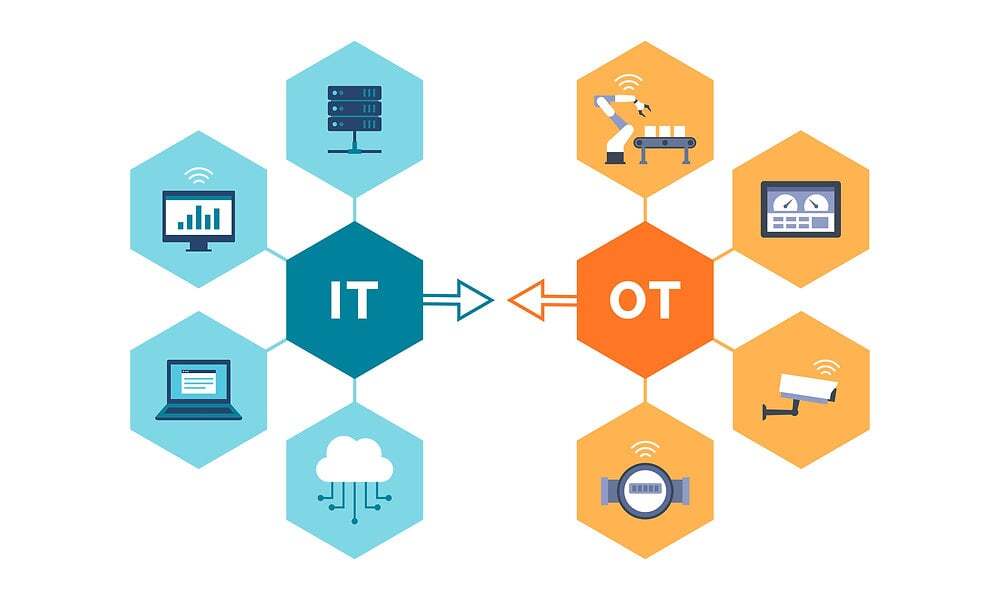
Information Technology (IT) primarily deals with the storage, retrieval, transmission, and protection of digital information. IT systems are used to support a range of business functions, from communication and data processing to customer management and enterprise planning.
Operational Technology (OT), on the other hand, encompasses systems that monitor and control physical processes, equipment, and devices. OT is essential in industries such as manufacturing, energy, utilities, and transportation, where it manages the operational functions that keep production and infrastructure running smoothly.
Examples of IT and OT Systems
IT Systems include:
- Enterprise Resource Planning (ERP) software
- Customer Relationship Management (CRM) tools
- Data storage and server management
- Networking and cybersecurity solutions
- Cloud computing platforms
OT Systems include:
- Industrial control systems (ICS)
- Supervisory Control and Data Acquisition (SCADA) systems
- Distributed Control Systems (DCS)
- Programmable Logic Controllers (PLC)
- Building management systems (BMS)
While IT focuses on information handling, OT emphasizes physical processes. However, as industries adopt more interconnected devices (IoT), the boundaries between IT and OT are increasingly blurred.
Key Differences Between IT & OT
1. Primary Function
- IT is focused on managing information flow and supporting business processes.
- OT is concerned with the direct control and monitoring of physical operations.
2. System Types & Assets
- IT environments typically include assets such as servers, endpoints, databases, business applications, and cloud platforms that support information processing and enterprise operations.
- OT environments include assets such as PLCs, SCADA systems, DCS platforms, sensors, actuators, and industrial machines that interact directly with the physical world.
3. System Priorities
- IT prioritizes data security, integrity, and compliance. Its primary concern is protecting confidential business and customer data.
- OT prioritizes uptime, safety, and process continuity. A critical failure in OT can disrupt physical operations and compromise safety.
4. Operating Environment
- IT systems typically operate in office environments, data centers, and cloud-based infrastructures.
- OT systems are deployed in factories, industrial facilities, utility sites, and other field-based operational environments where they interact directly with physical equipment.
5. System Lifecycles & Maintenance
- IT systems generally have shorter lifecycles and are updated, patched, or replaced more frequently to maintain performance and security.
- OT systems often remain in use for many years and may be patched less often because updates can affect production stability, system certification, or equipment availability.
6. Connectivity & Communication Protocols
- IT environments usually rely on standard networking technologies such as Ethernet, TCP/IP, and internet-based communication.
- OT environments often depend on specialized industrial communication protocols such as Modbus, PROFINET, and others designed for machine-to-machine communication and real-time control.
7. Real-Time Performance Requirements
- IT systems can usually tolerate small delays in processing, communication, or user response without causing immediate operational consequences.
- OT systems often require real-time or near-real-time performance to monitor and control physical processes, where even minor delays can affect equipment behavior, production stability, or safety.
8. Risk Management
- IT typically operates within controlled networks with robust cybersecurity measures.
- OT often exists in environments with older equipment and legacy systems, making it more vulnerable to external threats if connected to the internet.
9. Response to Incidents
- IT incidents, such as data breaches or system compromises, often require rapid remediation to protect data integrity and business continuity.
- OT incidents, such as equipment malfunctions or control system failures, require immediate intervention to prevent production stoppages, equipment damage, or harm to personnel.
The Impact of AI on IT & OT
Artificial Intelligence is transforming IT and OT, creating smarter, more efficient, and more resilient systems. Through machine learning, predictive analytics, and automation, AI enhances decision-making, improves efficiency, and opens new avenues for innovation across both IT and OT domains.
AI in IT:
- Enhanced Data Management and Analytics: AI enables IT to process and analyze vast amounts of data in real time, providing valuable insights for decision-making across business functions.
- Strengthened Cybersecurity: AI bolsters cybersecurity with advanced threat detection, identifying potential security breaches before they escalate.
- Improved IT Operations and Automation: IT operations benefit from AI-driven automation, with virtual assistants streamlining service management and optimizing resource allocation.
AI in OT:
- Predictive Maintenance and Reduced Downtime: AI-based sensors continuously monitor equipment, predicting potential failures and allowing proactive maintenance to minimize downtime.
- Optimized Production and Process Efficiency: Adaptive control systems powered by AI adjust operational parameters in real time, improving efficiency and reducing waste.
- Enhanced Safety and Risk Management: AI detects hazardous conditions in OT environments, alerting operators or shutting down equipment automatically to prevent accidents.
IT, OT & AI Convergence
As organizations pursue digital transformation, the convergence of IT and OT, supported by AI, becomes essential for achieving operational efficiencies, reducing downtime, and enabling predictive maintenance. This blending, often referred to as IT/OT convergence, leverages data from OT systems and uses AI-driven IT analytics to create more intelligent, responsive environments.
For example, an OT system in a manufacturing plant might collect real-time data on machine performance, which is then transmitted to an IT system that uses AI analytics to predict potential failures. This predictive capability can prevent downtime, extend equipment life, and reduce maintenance costs.
Collaborative Opportunities Between IT, OT & AI
The collaboration between IT, OT, and AI enables organizations to:
- Enhance Operational Efficiency: AI-powered analytics provide actionable insights for optimizing both IT and OT processes.
- Increase Security: AI can monitor cross-domain interactions for unusual activity, helping IT teams secure OT environments against cyber threats.
- Streamline Maintenance: Predictive analytics help forecast potential OT equipment failures, allowing for timely, cost-effective maintenance.
- Support Innovation: AI-driven automation and smart manufacturing solutions enable organizations to drive new innovations in automation, real-time monitoring, and process optimization.
However, for successful collaboration, IT and OT teams must understand each other’s unique challenges and priorities. AI can facilitate this by bridging the cultural and operational gaps between these traditionally separate domains.
Integrating IT, OT & AI into a Strategic Plan
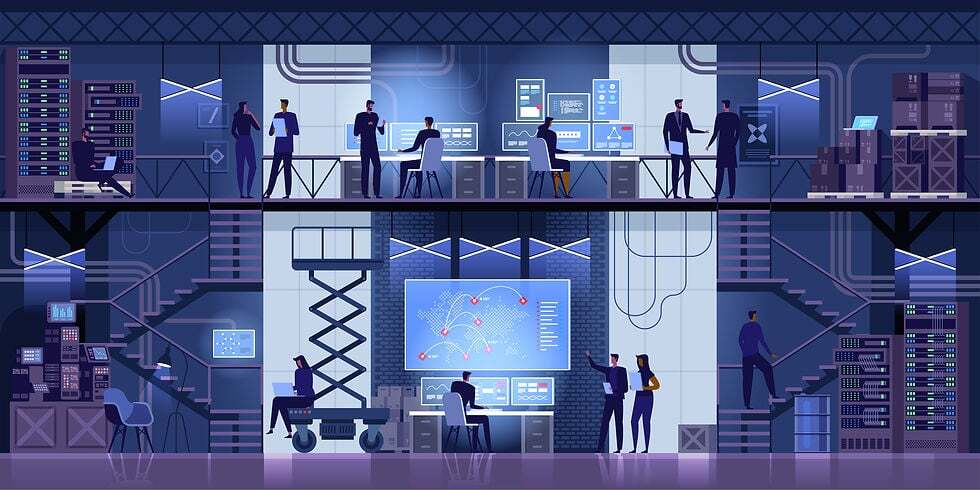
A comprehensive strategic plan that includes IT, OT, and AI can maximize the strengths of each while addressing potential vulnerabilities. Here’s how to structure such a plan:
- Assessment and Goal Alignment:
- Assess existing IT, OT, and AI systems and understand how they support organizational objectives.
- Align IT, OT, and AI goals with the organization’s strategic priorities, such as productivity, security, and scalability.
- Developing an Integration Roadmap:
- Create a roadmap that outlines specific projects, timelines, and resources required to integrate IT, OT, and AI.
- Identify which OT systems can benefit from AI analytics without compromising safety or security, such as predictive maintenance tools.
- Cybersecurity and Risk Management:
- Establish a unified cybersecurity framework that addresses the needs of IT, OT, and AI. AI-based threat detection and automated incident response can enhance security across all domains.
- Train OT personnel in cybersecurity best practices and establish cross-functional teams to handle incidents involving both IT and OT.
- Infrastructure and Interoperability:
- Invest in infrastructure that supports AI, such as IoT sensors, high-performance computing, and secure cloud environments. Middleware or integration platforms can facilitate data exchange between IT and OT without disrupting operations.
- Continuous Monitoring and Optimization:
- Implement AI-powered monitoring solutions to provide real-time visibility into IT and OT performance. Continuous evaluation and refinement of AI strategies ensure alignment with organizational goals.
- Culture and Training:
- Promote a culture of collaboration by fostering open communication and mutual understanding among IT, OT, and AI teams.
- Provide cross-functional training to help each team understand the other’s priorities, tools, and processes.
- Evaluating Compliance and Regulatory Requirements:
- Regularly review compliance requirements to ensure the integrated IT, OT, and AI systems meet all necessary regulations and maintain data integrity.
IT vs. OT FAQs
What is the difference between IT and OT?
IT focuses on managing, storing, securing, and transmitting digital information that supports business operations. OT focuses on monitoring and controlling physical systems, equipment, and industrial processes. In simple terms, IT manages data and business applications, while OT keeps operational environments running safely and efficiently.
What are OT and IT systems?
IT systems include technologies such as ERP platforms, CRM software, servers, cloud environments, and cybersecurity tools that support communication, data processing, and business workflows. OT systems include technologies such as PLCs, SCADA systems, DCS platforms, sensors, and building or industrial control systems that interact directly with physical assets and operational processes.
What is the difference between IT and OT priorities?
IT typically prioritizes data security, system integrity, compliance, and the reliable performance of business applications. OT, by contrast, prioritizes uptime, operational continuity, safety, and the stable performance of equipment and control systems. That difference is one of the main reasons IT and OT teams often approach risk, maintenance, and change management differently.
What is the connection between OT and IT?
IT and OT are increasingly connected through shared data, networked devices, and digital transformation initiatives. OT systems generate real-time operational data, while IT systems help store, analyze, secure, and act on that information. As organizations adopt more connected infrastructure, the relationship between IT and OT becomes less separate and more interdependent.
Why is IT and OT collaboration necessary?
IT and OT collaboration is necessary because modern organizations need both secure digital systems and reliable physical operations to function effectively. When the two work together, organizations can improve visibility, strengthen cybersecurity, reduce downtime, support smarter maintenance strategies, and create a more coordinated approach to innovation and risk management.
What are the similarities between OT and IT cybersecurity?
Although IT and OT environments have different priorities, both require a disciplined approach to cybersecurity, risk management, resilience, and incident response. In both cases, organizations need to protect critical systems, reduce vulnerabilities, monitor for threats, and maintain continuity. The difference is that IT often centers on protecting data, while OT must also account for operational disruption and physical safety.
How does AI support IT and OT integration?
AI helps connect IT and OT more effectively by turning operational data into actionable insight. It can support predictive maintenance, improve real-time monitoring, strengthen threat detection, optimize performance, and help organizations make faster, better-informed decisions across both digital and physical environments.
What should organizations prioritize when integrating IT and OT?
Organizations should start with clear goals, a realistic integration roadmap, and a cybersecurity framework that accounts for both business systems and operational environments. Just as important are interoperability, continuous monitoring, compliance, and cross-functional collaboration, since successful integration depends as much on governance and communication as it does on technology itself.
Final Thoughts
The integration of IT, OT, and AI is not just a technological initiative but a strategic approach that can transform an organization’s operations and improve resilience. By including all three in the strategic plan, companies can enhance efficiency, improve safety, and drive innovation.
Organizations that strategically manage the convergence of IT, OT, and AI will be better positioned to adapt to new technologies, respond to market changes, and ensure sustainable growth. The investment in planning, infrastructure, and collaboration is essential, as the success of IT and OT integration—amplified by AI—relies on a well-defined strategy that respects the unique qualities of each domain while harnessing their combined potential for a smarter, more resilient future.